
The Indian Sugar Mills' Association, the industry lobby group, will take the proposal to Food & Agriculture Minister Sharad Pawar soon, sources close to the development said.
Increasing sugar production shall create problems for the industry, whereas boosting ethanol output can bring rich returns, Union Minister Nitin Gadkari told sugar mills on Wednesday. Speaking at a conference on sugar and ethanol, organised by the Indian Sugar Mills Association, Gadkari surprised the audience comprising senior executives of sugar mills by stating that the future will become bleak for the industry if it continues to churn out high quantities of sugar. "We need more ethanol than sugar. Also, bio-ethanol is the way to go as it can be stored for a longer duration as compared to conventional ethanol. "If you increase sugar production, it will create more problems for you.

Prices had started to ease following the government's decision to allow duty-free imports of 1 mt of raw sugar and would weaken further over the next 7 to 10 days.

The Indian government's decision to ban sugar exports until September 30 has drawn sharp criticism from the sugar industry and farmer leaders, who fear long-term negative impacts despite the stated aim of controlling domestic prices and ensuring availability.

The state government has formed two committees under the chief secretary and the cane commissioner on the matter.

With the cane crushing season set to commence on November 15, lakhs of cutters from various districts have already migrated to the sugarcane belts in western Maharashtra and many other states, according to the Maharashtra Sugarcane Cutters and Transport Association.
Presently director at the Indian Council of Agricultural Research's Sugarcane Breeding Centre in Coimbatore, Bakshi Ram's next target is to improve both cane yields and sucrose content in cane varieties cultivated beyond the Vindhyas in Tamil Nadu and Karnataka, as also Maharashtra.

Amid the political push and pull, the Centre's decision to allow sugar exports and remove the 50 per cent duty on molasses exports has rekindled hope in the industry that more relief may follow.
India is all set to export raw sugar for the first time. The Indian Sugar Exim Corporation has signed a deal with Al Khaleej refinery of Dubai to export raw sugar.

Sugar year runs from October to September. Sugar demand is expected to be around 23 million tonne next year, he said while addressing the media on 'sugar decontrol' on behalf of private and cooperative mills.

Sugar prices in October were Rs 36-37 a kg, from where they fell by Rs 8-9 per kg.

The increase in MAT rate from 15% to 18% in effective terms to 19.93% from 16.995% would mean higher cash outflow for the companies paying tax at MAT Rate like Balrampur Chini and Bajaj Hindusthan.
Projecting a dip by nearly 50 per cent in sugar exports to 10 lakh tonnes this season (October-September) from 18 lakh tonnes, sugar industry on Wednesday demanded enhancement of incentives given by the government.

The demand growth in the low-income category is expected to be driven mainly by packaged branded sugar as well as traditionally consumed gur (jaggery) and khandsari.

Ex-mill sugar prices have remained steady in the range of Rs 3,250-3,350 per quintal in north India and at Rs 3,100-3,250 per quintal in the south India.
In a letter written recently to the Finance Minister, Pawar had said that arrears of sugar mills have risen to over Rs 10,000 crore (Rs 100 billion) and there was a need to hike import duty to curb shipments, which is putting downward pressure on local prices.

The benchmark M-30 variety of sugar has declined by over 3 per cent in November to trade now at Rs 3,694 per quintal
The country has exported about 5 lakh tonnes of raw sugar so far availing the benefit of the subsidy, according to the Indian Sugar Mills Association (ISMA).

The production in Maharashtra is pegged higher at 11-11.5 million tonnes against 10.71 million tonnes

Poor rain threatens recovery in production this season, sugar prices at three-month high
The subsidy will be credited to bank accounts of farmers against cane price dues and are compliant with WTO norms. This will benefit millions of farmers in Uttar Pradesh, Maharashtra and Karnataka.

A projected drop in production in the 2016-17 sugar season (October-September) has kept domestic prices firm, reflecting in improved profitability and stock prices of companies.

Last year, the country produced about 77.52 million tonnes of fruits, 149.6 million tonnes of vegetables, 104.32 million tonnes of rice and 93.90 million tonnes of wheat.

UP's mills, dominated by the private sector's 94 units, have already expressed their inability to participate in the next crushing season
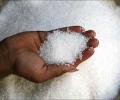
Output, consumption estimates further revised downwards; debt restructuring for mills possible.
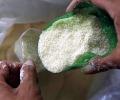
The govt is increasing the duty to 15 per cent from the existing 10 per cent.

'The government is of the view that distilleries around Hapur and Bijnor would pollute groundwater in the vicinity and its spill over into the sacred Ganga. Hence, we are looking to close these distilleries to prevent them from discharging water into the open area,' said a senior UP government official.

Uttar Pradesh Chief Minister Yogi Adityanath asserted that Uttar Pradesh enjoys a clean environment, unlike Delhi, which he likened to a 'gas chamber' due to its pollution levels.
Finance Minister P Chidambaram on Thursday said it was not sufficient to attain a high 8 per cent growth in one year but necessary to sustain it in the coming years.
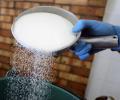
The last few years have been uncharacteristically good for the Indian sugar sector for a variety of reasons. While on the one hand, the weather supported good crop production; on the other hand, the programme to blend ethanol with petrol took off in a big way. The long-pending problem of burgeoning sugarcane arrears almost came down to nil and exports boomed to record highs.
Maharashtra, the country's largest cane and sugar producer after Uttar Pradesh, had, over the past few years, weathered adverse market dynamics brought about by a domestic and global sugar glut, mounting arrears and muted exports.
Three million tonnes of buffer stock, where the government bears the interest and insurance cost, was announced by the Centre only for a year and that period is ending in June.
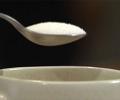
Government allows duty-free import of 500,000 tonnes raw sugar till June 12. At present, India levies an import duty of 40% on sugar

India is the world's second-biggest sugar producer after Brazil and has been looking to offload a surplus in an already well-supplied world market.

The ethanol vehicles will have the flexibility to switch to other fuels

ugar mills in UP owe thousands of crores to cane farmers.
India's plan to produce ethanol from second-generation (2G) sources -- mainly farm waste -- is taking time to materialise even as the government is set to dedicate to the nation on Wednesday a Rs 900-crore plant set up by Indian Oil Corporation (IOC) in Panipat. Though state-run oil companies had decided to set up at least 12 plants in 2016-17 with an investment of around Rs 10,000 crore, this will be the first unit coming on track while others are stuck in various stages owing to issues like capital expenditure, lack of feedstock, and high rates of finished products compared to traditional ethanol units. According to industry sources, three more second-generation plants are coming up.

'India is there to stay as it has always been a consumer.' 'Its consumption has been huge, mainly due to demographics.'

The sugar industry clamouring for control and intervention should set the alarm bells ringing in the corridors of power.
